Why Does Concrete Fail Even When the Mix Looks Right? Common On-Site Mistakes to Watch For
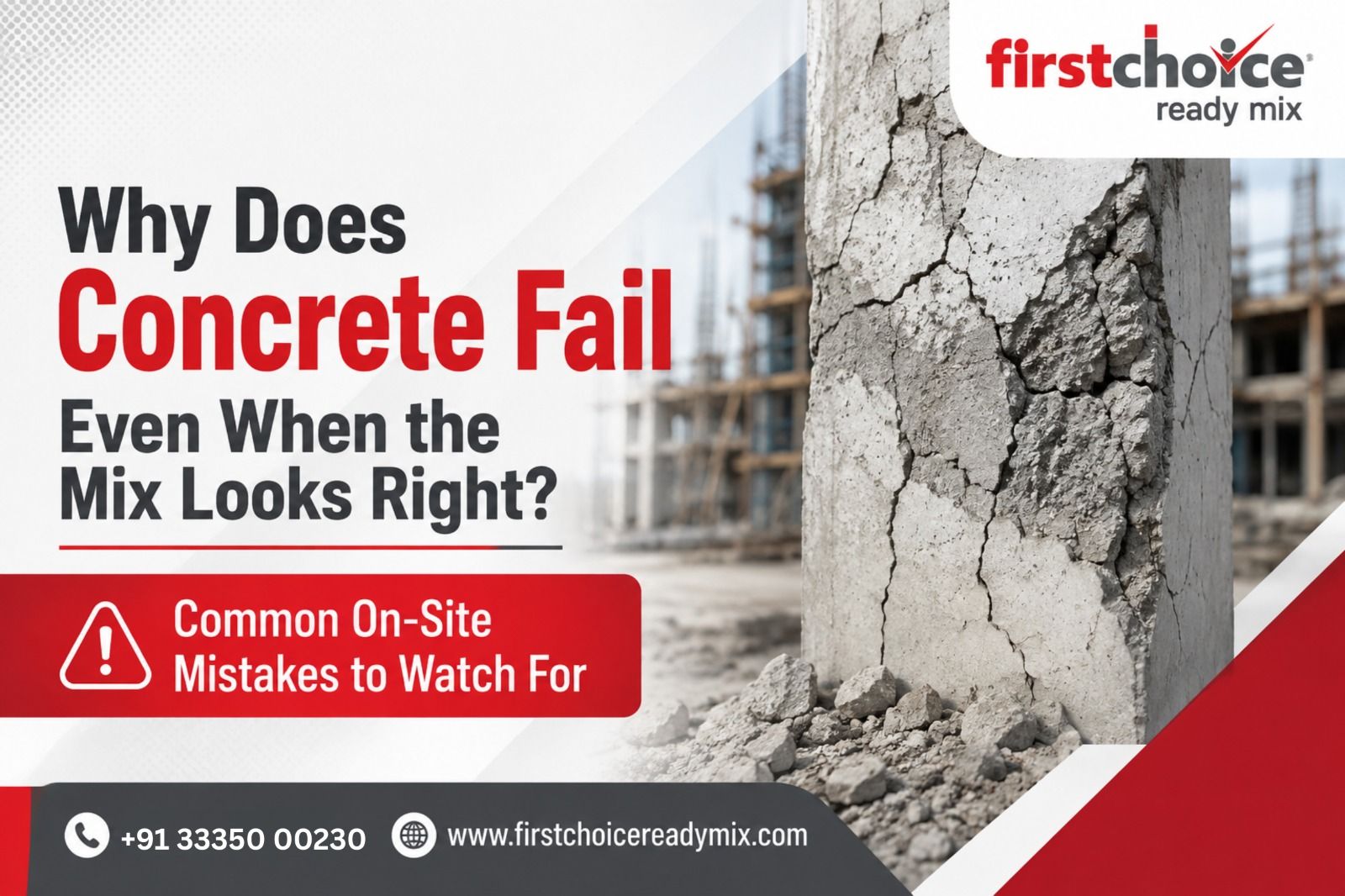
The concrete you pour might be supplied with the perfect grade, the right slump and all of the necessary quality control certificates. However, six months later cracks could begin appearing, the surface might start breaking down or structural faults could become apparent. This is because the performance of concrete has far more to do with than the mix used.
Even the best quality readymix concrete can suffer under the hands of inexperienced construction crews on site. From delayed placement times to inadequate curing after it’s been poured, the damage from these on-site blunders are far greater than the mix design itself, highlighting why partnering with an experienced and technically capable ready mix concrete manufacturer in India is only part of the story; careful implementation is just as important.
With that in mind let’s review the common on-site mistakes that may leave even the perfect concrete mixture proving inferior.
Why Even a Perfectly Formed Concrete Mix isn’t Enough
While batching plants work with a carefully controlled environment which dictates consistent raw materials, mix proportions, and quality tests which removes many of the error opportunities associated with site mixed concrete, the story is different after it has been poured. Delivery transportation, placement, consolidation, finishing, and subsequent curing are all crucial stages where on-site issues may mean that the concrete never attains the anticipated strength and durability.
Common On-Site Mistakes That May Lead to Concrete Failure
1. Adding Water On-Site
An overwhelmingly common mistake is to try to make the concrete more workable by adding water on site. While this makes the material easier to pour, excessive addition of water will increase the water-cement ratio leading to an increase in Shrinkage, reduced compressive strength, dusting on the surface and ultimately reduced durability and higher permeability. Instead of adding water, contractors can use a specified mix design or appropriate admixtures to achieve workability.
2. Delayed Placement
Ready-mix concrete is, quite obviously, designed to go off when poured. The hydration begins as soon as water and cement come into contact and while this allows time for ready-mix to be delivered to site, over-long delays due to issues on site can compromise not just workability but the durability too. Ensure adequate arrangements for timely transportation and placing and check with your supplier on concrete transit time.
3. Poor Compaction
Unduly poor compaction of ready-mix can lead to a lot of trapped air being incorporated into the concrete mixture which means increased permeability, and reduced durability. If compaction is not handled efficiently using appropriate vibration techniques, you will risk problems such as honeycombing, weak areas and insufficient bond around reinforcement.
4. Improper Finishing Procedures
Finishing the surface too early can trap water, creating a barrier under the finished concrete surface. This can lead to scaling, dusting and delamination issues and is something to be avoided at all costs. In most cases, the surface should only be finished after bleed water on the surface has evaporated naturally.
5. Lack of Proper Curing
Many of concrete’s worst problems aren’t apparent until much later, typically after many months, simply because the importance of the curing process has been overlooked. Concrete needs moisture in its first few days to achieve its full compressive strength. Without proper curing, your concrete could suffer premature surface deterioration and cracking.
6. Uncontrolled Weather
Hot and cold weather extremes can present significant risks to your fresh concrete. Hot temperatures can accelerate setting times, encourage surface shrinkage and even cause rapid drying leading to plastic shrinkage cracking, while rain can wash cement away from the surface, spoiling finish and durability. Some high-quality concrete suppliers carry out weather-based adjustments to mix designs to counteract adverse weather effects.
7. Ill-Prepared Formwork
Even the best concrete mix can fail if it’s put into poor formwork. Leaking joints, misaligned formwork, loose anchors or dirty formwork surfaces all contribute to problems that impact on formwork stability, the quality of the finish and the dimensional accuracy of concrete.
How a Professional RMC supplier Helps to minimise these Risks
The real benefits of choosing a truly professional ready mix concrete manufacturer in India lie in their understanding that providing a quality product extends beyond the batching plant. With BIS compliant quality testing, a guaranteed consistent batch slump, on time delivery and technical guidance, a good supplier provides invaluable back-up, especially with project-specific suggestions.
Signs of Post Placement Issues
In addition to the points above, watch out for common early warning signs of problem concrete including:
-
Cracking
-
Surface dusting
-
Honeycombing
-
Uneven colour
-
Surface scaling
-
Water bleeding through the concrete surface
Best Practice Guidance
So, how can construction teams go about it?
- Only use the specified concrete grade.
- Never add water to readily-mix without the technician’s specific permission or from an approved admixture
- Pour concrete without any significant delay.
- Vibrate and compact adequately.
- Avoid early surface finish
- Ensure adequate and ongoing cures.
- Use protection from adverse weather conditions.
- Coordinate with your RMC supplier throughout the placement.
Build strong with the right Concrete partner
Concrete failure is seldom caused just by mix design; it is usually due to preventable errors in handling, pouring, or curing. Well-designed concrete also requires effective handling practices so as to fulfil its durability and strength.
In many ways, an experienced supplier such as Firstchoice Readymix gives contractors access to quality-controlled ready mix concrete, complex mix designs, and technical assistance that contribute to minimising risks in the process of construction. Having reliable delivery, modern manufacturing, and being committed to quality products makes the right partner decide whether the constructed concrete structure can stand or exist.